
The next morning of our Rhine River cruise with AmaWaterways, we docked in Düsseldorf. There were a few different excursion options available, and having previously seen pictures of the Christmas markets in Cologne, we really wanted to head there*. We also really love beer and wanted to taste Kölsch in the place where it originated. As you’ve probably already deduced, Cologne is also where eau de cologne was invented (1799).
More important than smelling good, however, Cologne was founded as a Roman military outpost that was later named Colonia Claudia Ara Agrippinensium after the Roman Empress Agrippina, who was born there. Suffice it to say, she was quite the woman. Based on what we learned during our tour, I have no doubt she served—at least in part—as George R.R. Martin’s inspiration for Cersei Lannister. I mean, come on:
Agrippina convinced her husband, Emperor Claudius, to elevate the settlement to the status of a colonia, a prestigious Roman city. She named it after herself, marking it as a political and cultural center in the Roman Empire. This status brought urban development, trade, and a strong Roman military presence, transforming the city into a major hub. Agrippina’s life was as dramatic as her political maneuvering. Known for her ruthlessness, she eliminated rivals and used her connections to secure power for herself and her son, Nero, whom she helped position as Claudius’s successor. After Claudius’s suspicious death—widely believed to have been orchestrated by Agrippina—Nero became emperor. However, their relationship soured, and Nero ultimately ordered her execution in 59 CE.
I call out Cologne’s Roman history because part of our walking tour included a stop at the Roman Harbor Road, a reconstruction of part of the Via Agrippa.

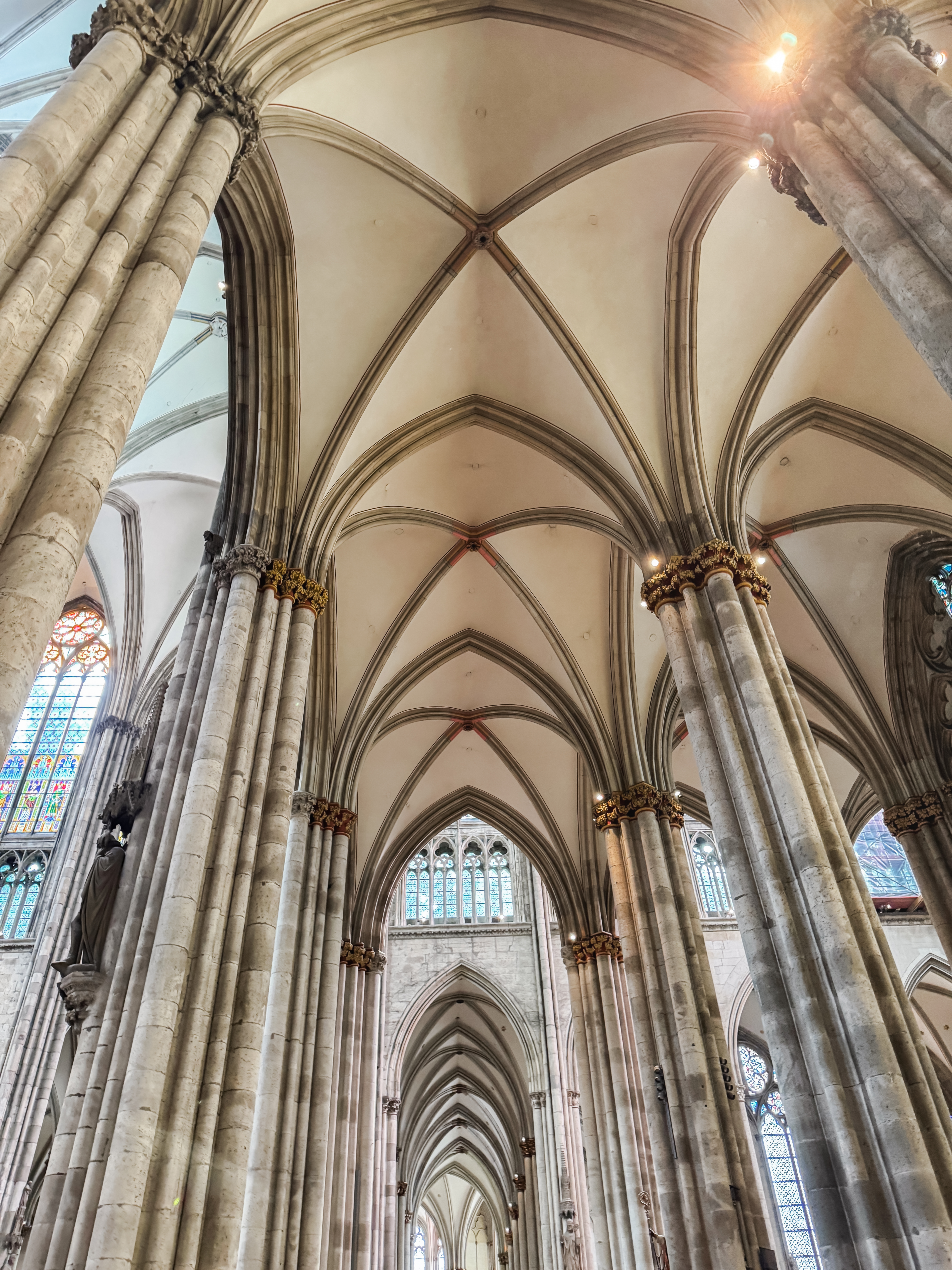
Following the fall of the Roman Empire, Cologne became a vital center for Christianity in medieval Europe, with its archbishop wielding significant religious and political influence. The Cologne Cathedral—the symbol of this power—was begun in 1248, designed to house the Shrine of the Three Kings. When it was completed in 1880, it was the world’s tallest building until 1890, and today remains the tallest cathedral in the world.




Next, we stopped in a few squares, which, at this time of morning, were fairly quiet since most of the shops and restaurants weren’t open yet. We wrapped up at the Kaiser Wilhelm II statue near the Hohenzollern Bridge, which features thousands of love locks. For fans of The Amazing Race, you’ll recognize it from season 35, episode 7. (Later in our cruise, we passed the ferry where the contestants had to exchange coins and the castle where they had to solve a puzzle using those coins.)


At the conclusion of our walking tour, we had some time on our own to explore, so Alan and I headed over to Früh am Dom to finally try an authentic Kölsch beer (we chose this particular brewery because it was the only one that was open. If you’d like to know more about Kölsch in Cologne, I recommend checking out this blog. When we arrived at Früh, the outside was hopping, while the inside was dead. It turned out there was a major Euro soccer match taking place in Düsseldorf (!!) later that afternoon and most people were pre-gaming. It took a while to get a seat inside and even longer to get service, but the space was beautiful. I’m glad we made the effort to visit, but I don’t think our experience was a true representation of what you’d normally find visiting a brew house in Cologne given the early afternoon hour and the soccer match.


One important thing to note about Cologne before we head off to our next stop is that the city was decimated in World War II. Bombing destroyed about 80% of the city center, killing over 90% of its population. (You can read more about this on the website for the National WWII Museum in New Orleans.) Reconstruction began immediately after the war, continuing well into the 1990s in an attempt to restore the city to its pre-war appearance. Today, Cologne is a major cultural center with many museums, galleries, and institutes of higher education. Cologne is currently the fourth largest city in Germany, with over one million inhabitants.
We arrived back in Düsseldorf just before lunch. We ate an incredibly delicious meal onboard before heading out into the city, which was awash in soccer fans who’d come over from Switzerland. It was absolute pandemonium!

Unfortunately, I happened to open Facebook while we were in our room and saw a picture of a cat that looked exactly like Lihue wandering the streets a block from our house. Completely panicked, I reached out to our amazing cat sitter who, thankfully, was just pulling up to our house at that moment. I was freaking out, waiting to hear back from her, but as it turned out, all was well. I’ve seen the gray cat a few times since then, and despite being a couple pounds thinner than our chonky boy, they are remarkably similar in appearance.
After lunch, we wandered around Düsseldorf in an effort to find a beer hall that served altbier. Altbier is to Düsseldorf what Kölsch is to Cologne. There are many differences between the two styles of beer, but the main one is that while Kölsch is a lager, altbier is an ale. It is a copper-colored beer that is top-fermented, an older method of brewing than the bottom fermentation of lagers.
Given the crowds for the soccer match, it was incredibly difficult to get a feel for the Old Town, and while we did make our way to Zum Schlüssel, I’d be completely unable to pick the exterior out from a photo lineup or even tell you what street we were on. What I can tell you is a preferred altbier to Kolsch, but I tend to gravitate to maltier beers. Since I feel like we didn’t have a representative experience of what it’s like to visit one of these beer halls, I direct you once again to the Auslander blog for more information.


Leaving the brew house, we found ourselves on a quiet side street which was a nice respite from the rowdiness of the soccer crowd. Unfortunately, it wasn't completely quiet as a few gangs of lads would occasionally find themselves there on accident, at which time they would just piss on a building. The views were lovely; the smells not so much.
We did stumble upon a lovely little square that featured a church and then a little further on one of the most beautiful sculptures we've ever seen. A quick Google search reveals it is the Stadterhebungsmonument, which was unveiled for Düsseldorf's 700th anniversary. The bronze sculpture is by the artist Bert Gerresheim and shows scenes from the Battle of Worringen, the sealing of the city elevation charter, and the elevation of the parish church dedicated to Saint Lambertus to a canonry.


Back on board the boat, we shared tidbits of our day with new friends and learned that in Cologne, representatives from AmaWaterways took Brad to a wine store in a massive cave so that he could purchase wine to replace the wine that never made it onboard, and compared the various excursions that were on offer among the groups.

Then, it was time to get dressed for the special “winemaker dinner,” which was absolutely fabulous. It was so good, in fact, that I don’t have a ton of photographic evidence to share since I was too busy shoveling food in my mouth to take pictures.


After dinner, several of us assembled on the top deck of the boat as we sailed past Cologne, catching the cathedral all lit up at night. After several house outside chatting with our fellow guests, it was time for bed.

*If you’re considering a river cruise, one thing you should be aware of is a significant portion of your day is spent on buses going between your sites and the ship. In this case, it was a 40-minute journey from where we were docked to Cologne.


